The city's beaches: San Miguel, El Zapillo and beyond
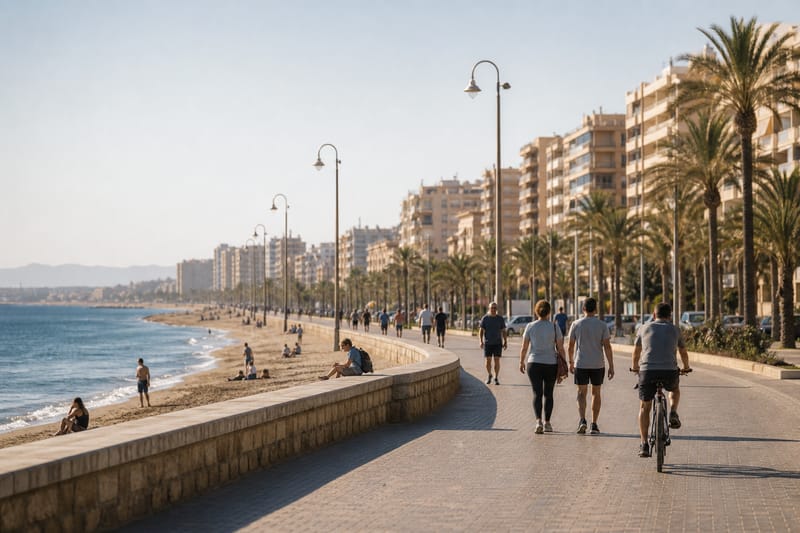
Few Spanish provincial capitals have the beach so woven into the street map. From the centre of Almería you can walk to San Miguel beach, which runs seamlessly into El Zapillo, the neighbourhood that lives facing the sea twelve months a year. Eastwards come El Palmeral and Nueva Almería beach, between palm trees and the residential blocks of the modern city, and then Costacabana, a quieter seaside district that already hints at the open coastline of the east.
More than a catalogue of sandy beaches, this coast is a routine. In the early morning it belongs to walkers and runners; veteran swimmers use it almost all year round; families come down with chairs and cool boxes on the long afternoons; the chiringuitos — the beach bars — stretch lunch far into the afternoon; and at the end of the day the shoreline becomes the best grandstand for watching the sun sink over the bay. AEMET's climate normals for the airport station (1981–2010) help to explain it: an annual average of around 19 °C, roughly 200 mm of rain and almost 3,000 hours of sunshine. They are no guarantee of perpetual good weather, but they do explain why the beach here is an everyday space and not just an August postcard.
Bathing flags, lifeguard cover, accessibility and services change with the seasons: always check the municipal pages and the signs on each beach before planning your day.
The Paseo Marítimo, the sunset street
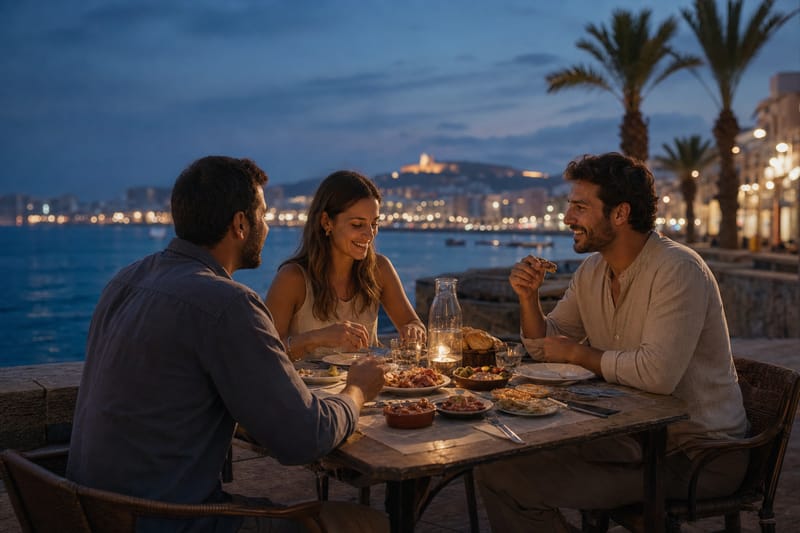
The Paseo Marítimo — the seafront promenade — stitches this whole urban front together and works like a high street running parallel to the water. In the morning it belongs to bicycles and to people walking before work; at midday, to the terraces; as evening falls it fills with locals who come out when the light turns golden and the heat eases off. It is also a natural extension of the tapeo: many tapas rounds end with a tapa facing the sea, and the food and tapas guide explains how that ritual works.
Here the sea is not an excursion: it is the street the city steps out onto for its stroll.
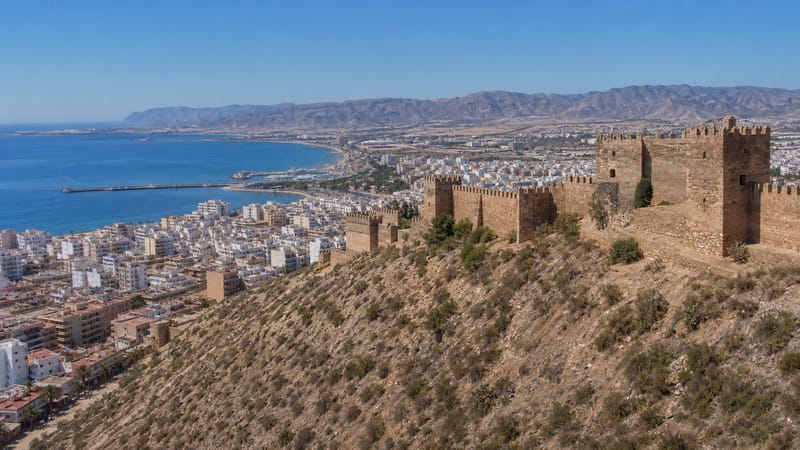
Anyone looking for historic Almería will find it along this edge too. The fishing port, the Parque Nicolás Salmerón and the Cable Inglés — the ore-loading pier that closes off Las Almadrabillas beach — join the everyday promenade to the city's history and heritage, and in June the Noche de San Juan fills this same sand with bonfires, as told in the guide to festivals and traditions.
The east of the municipality: Almería's long coastline
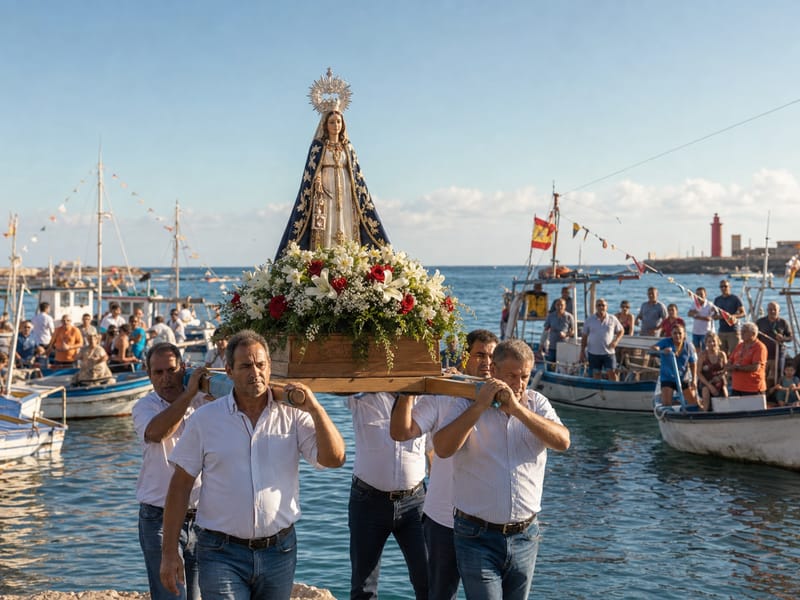
A map makes clear what intuition misses: the municipal territory of Almería — the municipality, not the compact city — stretches many kilometres eastwards. Beyond the airport, Retamar and El Toyo offer a different seaside atmosphere, more open and contemporary. Then come Torregarcía, whose beach keeps the memory of the find that tradition places in 1502 — the Virgen del Mar has been venerated there ever since, with a romería (pilgrimage) on the second Sunday of the year; the dunes and steppe of Las Amoladeras; and San Miguel de Cabo de Gata beach, beside the salt-workers' village of the same name.
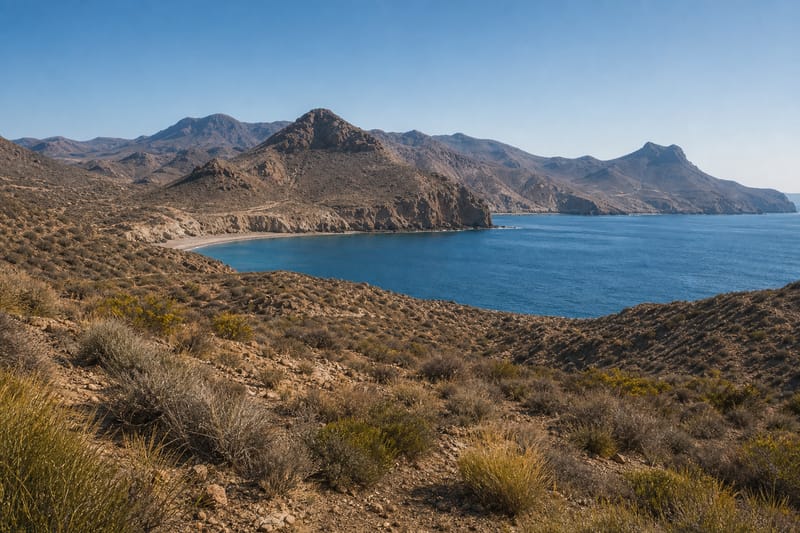
Further south the coast becomes protected landscape: Las Salinas, the hamlet of La Almadraba de Monteleva, La Fabriquilla and the coves of El Corralete, at the foot of the cape itself. It is worth underlining, because it surprises many visitors: this entire coastline belongs to the municipality of Almería. Depending on the stretch you move in or out of the natural park, but never out of the capital's municipal territory. It is a coast of few services and wide horizons, where the trip starts to feel more like a light expedition than a day at an urban beach.
Cabo de Gata-Níjar, a volcanic park beside the capital
About twenty kilometres from the city begins the Cabo de Gata-Níjar natural park, the great land-and-sea protected area of the south-east of the Iberian Peninsula, shared between the municipalities of Almería, Níjar and Carboneras. Its volcanic origin explains a landscape rare in Europe: dark cliffs dropping into a transparent sea, coves opening between ancient lava flows, dunes, steppes of esparto grass and dwarf fan palm, salt flats and underwater meadows of posidonia seagrass.
That value has earned it international recognition: it is a biosphere reserve and part of a UNESCO Global Geopark. For travellers, the practical translation is twofold: a coastline of dry, mineral beauty, and visiting rules designed to protect it, with regulated access in high season and waymarked trails. The plan here is not to tick off coves, but to go slowly.
Inside the park, outside the city: Mónsul, Los Genoveses, San José, La Isleta del Moro, Rodalquilar and Las Negras lie inside the natural park but outside the municipality of Almería: they belong mostly to the territory of Níjar. From the capital they are visited as day trips — and they are worth the journey — but presenting them as “Almería beaches” would be cheating with the map.
The salt flats and the birds
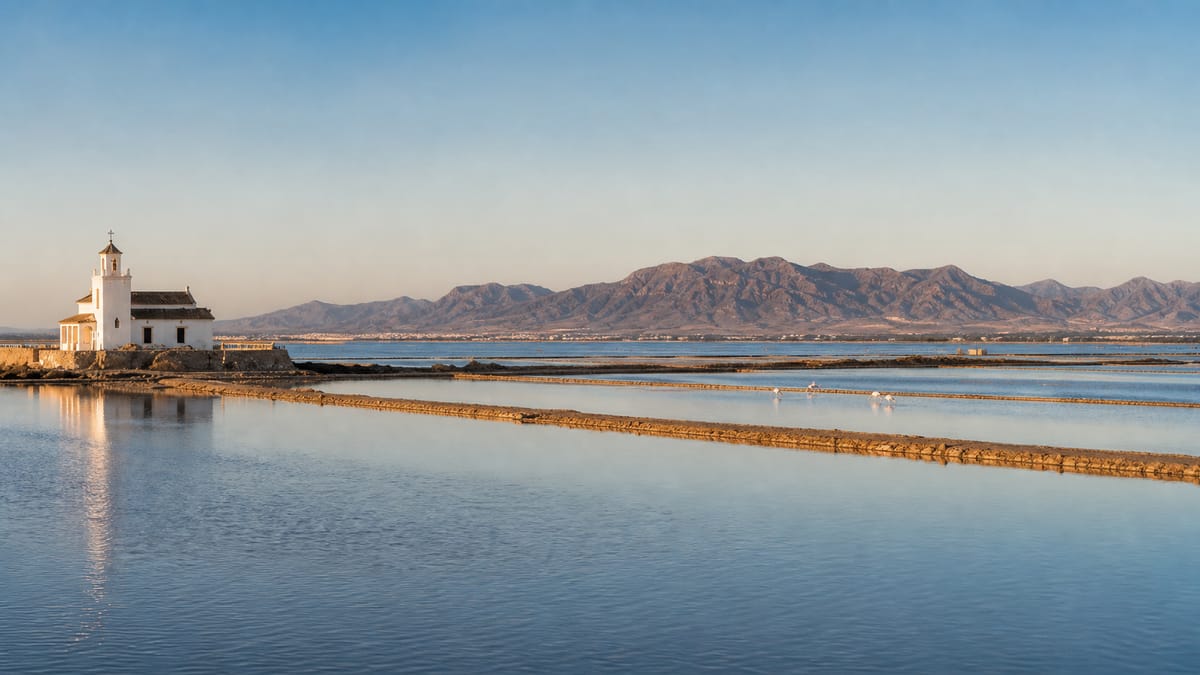
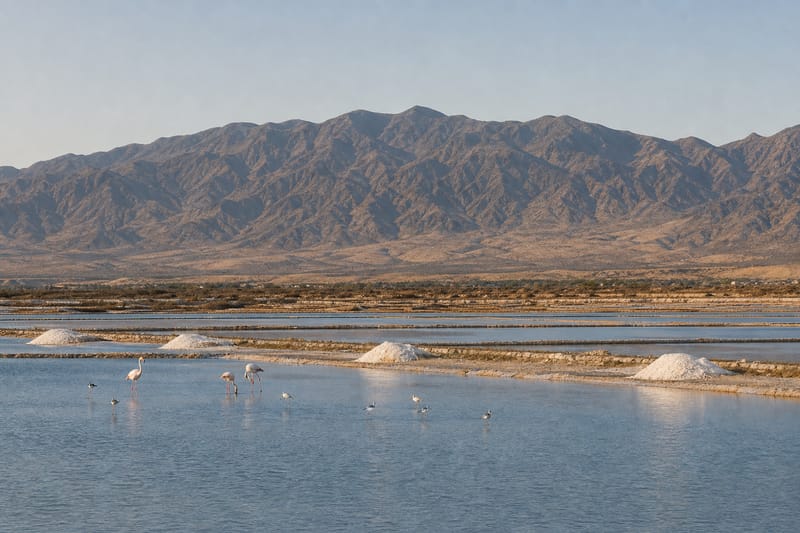
The Salinas de Cabo de Gata are the wet heart of the park and a double rarity: a saltworks with centuries of history and, at the same time, a first-rate wetland for birds on one of the most arid coasts in Europe. Depending on the time of year, the ponds gather flamingos and many other migratory species that find food and rest here. The viewing points beside the road let you watch without disturbing; a pair of binoculars turns the stop into the best moment of the day.
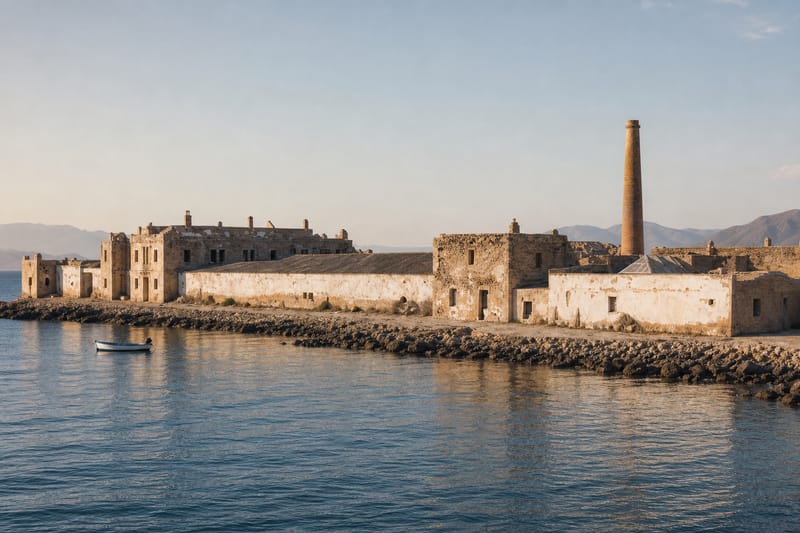
The ensemble also has a cultural silhouette. The church of Las Salinas, planted between the ponds and the sea, and the salt-workers' hamlet of La Almadraba de Monteleva make up one of the park's most recognisable views. It is fragile heritage — wind, salt air and visitors all take their toll — and the best way to love it is to look at it from just the right distance.
Day trips around Almería
The capital also makes a good base for the province's interior. Four half-day or full-day outings complete the picture of the territory:
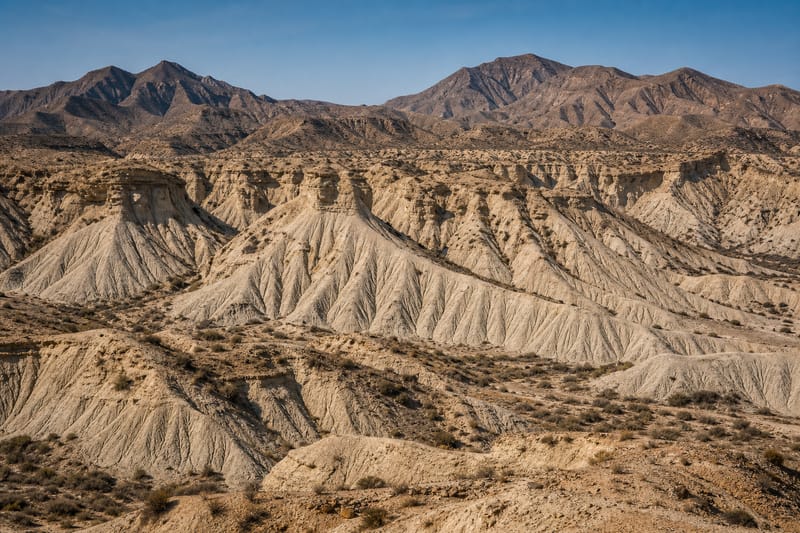
- The Tabernas Desert: gullies and badlands north of the city, the setting for decades of film shoots; Almería's relationship with cinema has a guide of its own.
- Níjar: a white village of potters and looms, the benchmark for the ceramics and jarapa rugs that fill homes across the province.
- Los Millares: the great Copper Age settlement at Santa Fe de Mondújar, key to understanding the archaeology rooms covered in the history and heritage guide.
- The gypsum karst of Sorbas: an underground world of caves and gypsum crystals, visited on guided tours.
None of these outings is in the city itself, and that is worth saying plainly; all of them work as a short trip by road. The itineraries guide suggests how to fit them into a 72-hour visit.
Travelling with respect
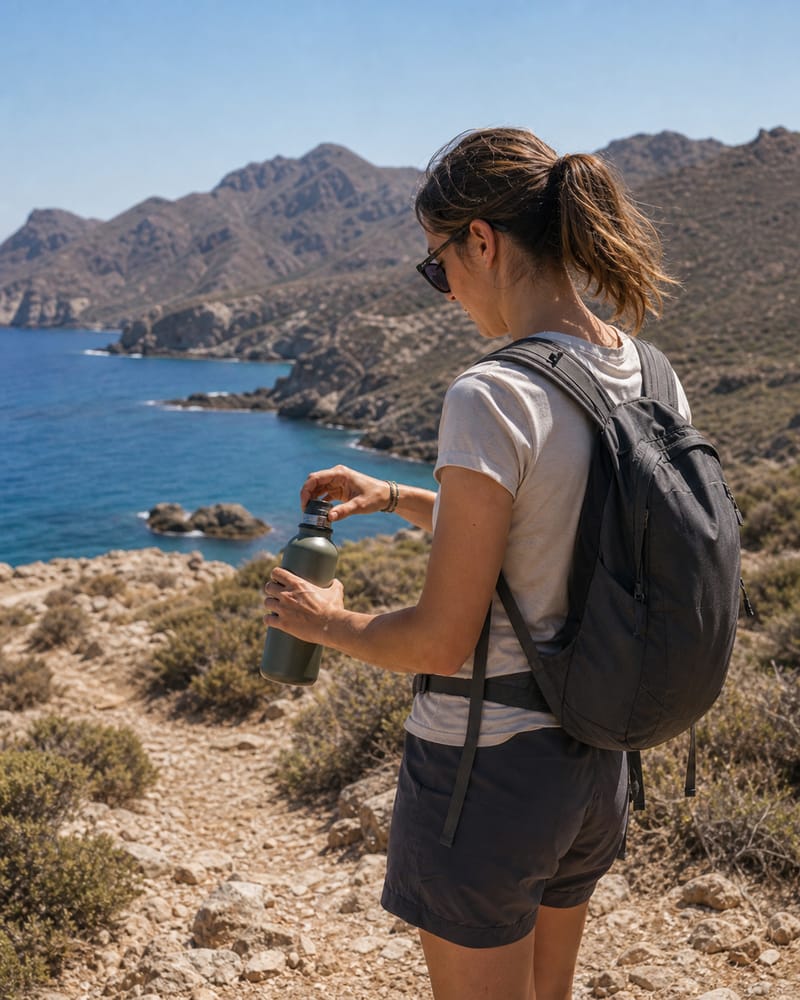
Almería's coast is generous and demanding at the same time. The same sun and the same aridity that make it luminous also make it fragile, and much of what you visit is protected land or delicate heritage. A few simple habits make the difference:
- Carry more water than you think you need and seek shade in the middle of the day: many of the eastern beaches have no services and barely any vegetation.
- In the natural park, keep to the waymarked trails and do not take stones, plants or sand: the volcanic landscape regenerates very slowly.
- Watch the birds of the salt flats from the viewpoints, quietly and without approaching the ponds.
- Access, parking and possible environmental restrictions change with the seasons: check the park's official pages before you go.
- Treat all of it — the saltworks church, the hamlets, the dunes — as what it is: a place where people live and work, not a film set.
Sources
This guide draws on institutional sources; specific facts (municipal and park boundaries, designations, climate) come from them. Flags, services, access and restrictions change with the seasons: always verify them on the official pages.
- Turismo de Almería — Cabo de Gata-Níjar natural park
- Turismo de Almería — Cabo de Gata route
- Turismo de Almería — municipal portal (beaches and services)
- Turismo de Almería — Festivals and traditions
- AEMET — Standard climate normals, Almería Airport
- Turismo de Almería — Los Millares
- Andalucía.org — Practical guide to the city of Almería (PDF)