A year in the street
Some cities explain themselves through their museums, others through their calendar. Almería belongs to the second kind: to understand it, you need to know what it celebrates, when it takes to the streets and which image it walks behind. Its festive year braids together four threads that cross again and again. Faith, with the Virgen del Mar, the city's patron saint, as the central figure of both January and August. The sea, which provides work, gives the devotions their names and turns the shoreline into a stage. Music, which runs from the brotherhood drum to the carnival murga and the Feria concert. And neighbourhood life, which turns every date into a web of neighbours, shared chairs and long tables.
One useful clarification before we begin: this guide focuses on the festivals of the city of Almería. The municipality is a large one — it stretches east as far as Cabo de Gata — and its outlying districts hold festivals of their own; the province, with more than a hundred municipalities, multiplies the calendar further. Here we follow, in order, the major dates of the urban year.
From the beach at Torregarcía in January to the banner of 1489 in December, Almería's year begins and ends facing the sea.
January: the romería of Torregarcía
The festive year starts early. On the second Sunday of January, the image of the Virgen del Mar leaves her sanctuary, in the Dominican convent beside the historic centre, and is accompanied to the beach of Torregarcía, on the eastern coastline of the municipality, on the way to Cabo de Gata. Tradition places there, in 1502, the discovery of the carving on the shore; each year this romería — a festive pilgrimage — retraces the bond between the patron saint and the sea that, so the story goes, brought her.
The day combines decorated carts and horses, meals shared on the sand, music and a Mass beside the watchtower that gives the place its name. It is a winter festival with springtime light, and one of the best excuses to get to know the municipality's eastern coastal strip: the landscape of dunes, salt flats and watchtowers described in the sea and nature guide.
Holy Week: brotherhoods with a rebuilt memory
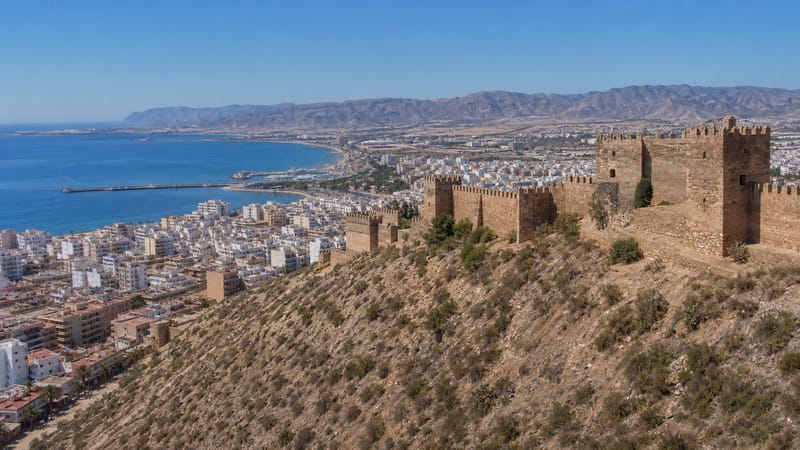
In spring, the brotherhoods bring their pasos — processional floats — out into the streets and the city changes rhythm: candle wax, drums, saetas and lines of penitents winding between the fortress cathedral and the Paseo de Almería, the axes of a good part of the processional routes.
Almería's Holy Week also has a particular history worth knowing in order to see it properly: much of the brotherhoods' historic heritage — carvings, thrones, ceremonial pieces — was lost during the Civil War, and the confraternities rebuilt it afterwards, piece by piece, over the course of the twentieth century. What parades today is largely the fruit of that patient recovery, a heritage younger than its solemnity suggests. The context of those years, from the bombardments to the shelters, is told in the history and heritage guide.
May: crosses of flowers, scissors and an apple
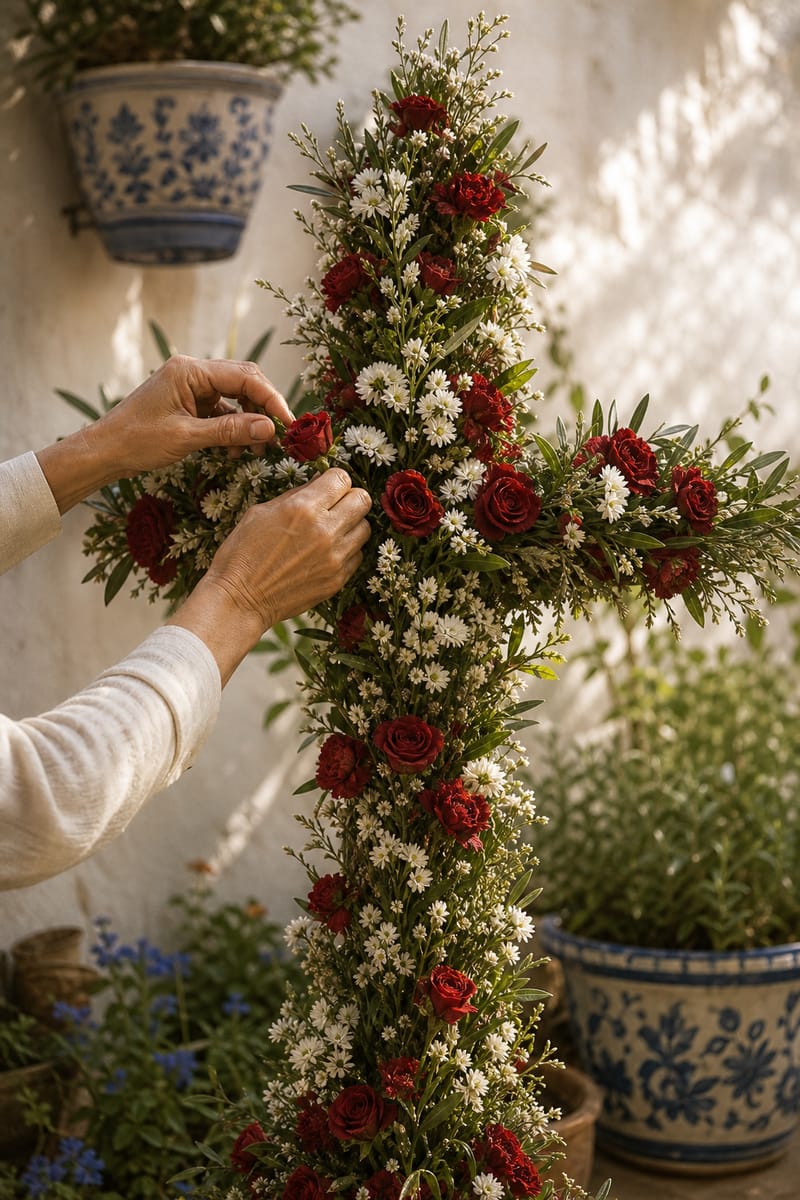
With spring fully settled in, associations, peñas (local clubs) and brotherhoods raise crosses of flowers in squares, courtyards and clubhouses. Around each cross unfolds a small domestic museum: ceramics, gleaming copperware, Manila shawls, fans, guitars and potted plants, arranged with a care best enjoyed slowly, cross by cross.
One detail intrigues anyone seeing it for the first time: a pair of scissors stuck into an apple at the foot of the cross. The explanation handed down locally speaks of "cutting away the evils" — or the criticism that might be aimed at the cross and at those who put it up. It is a popular tradition, not a codified rite: take it as one of those kindly superstitions that survive because they make people smile.
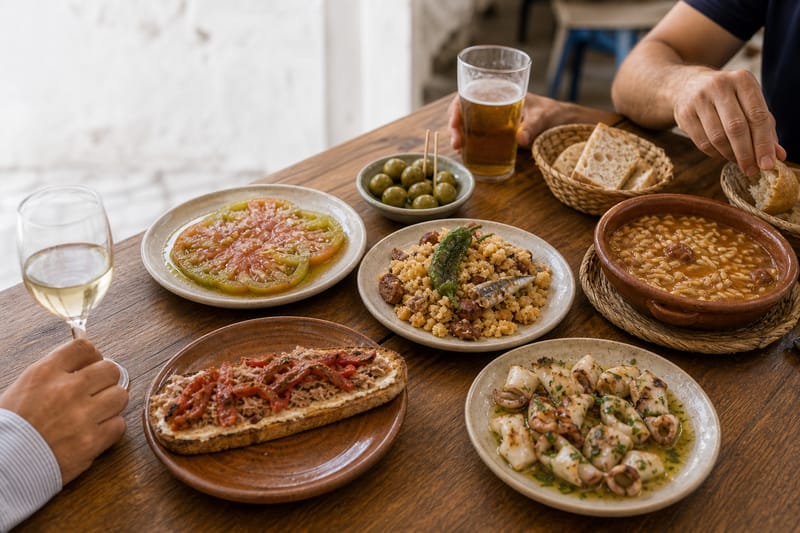
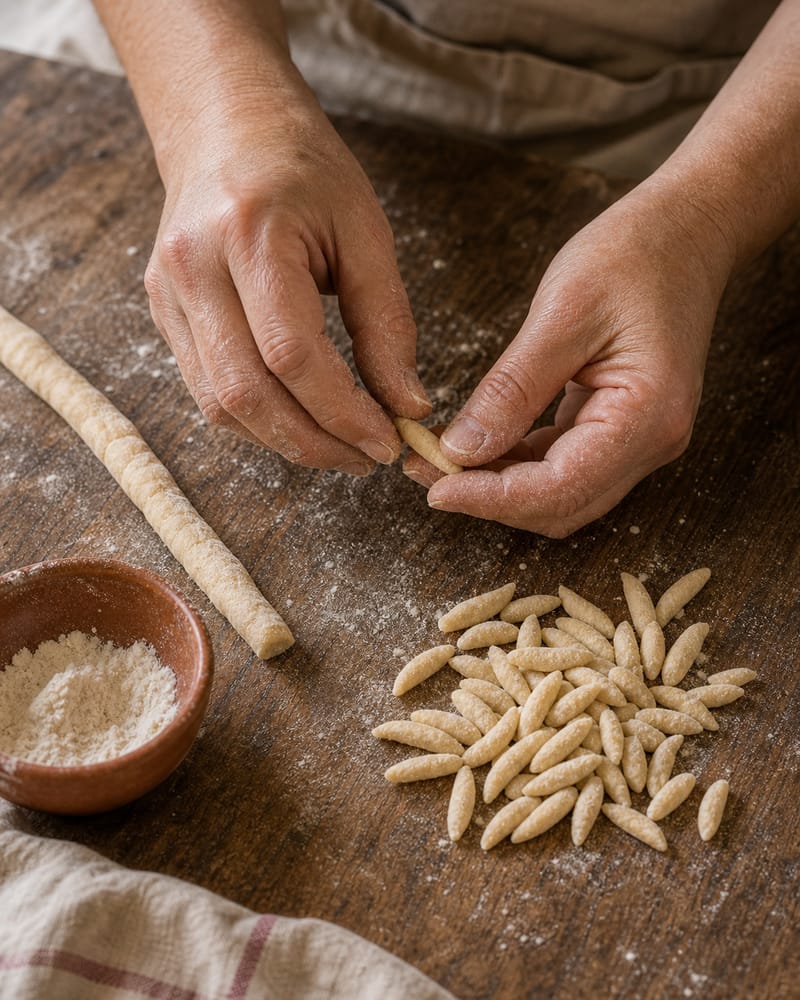
Around the crosses, people also eat and sing. It is a good moment to try the food of Almería's gatherings: gurullos, trigo, migas and local sweets, hearty festive dishes we explain in the food and tapas guide.
The Noche de San Juan: fire at the water's edge
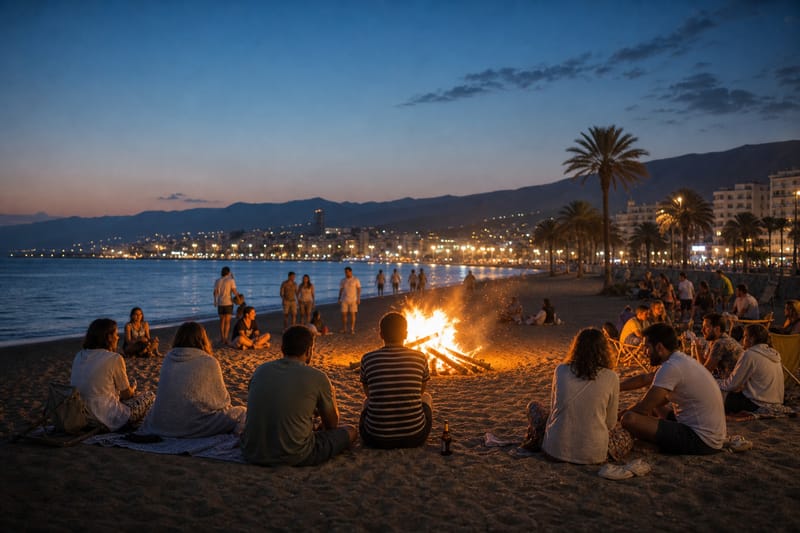
On the night of 23 June, the shortest of the year, the city beaches fill with bonfires, dinners on the sand and music until the early hours. St John's Eve is the most spontaneous festival on the calendar: there is no procession or programme to follow, only the shared ritual of fire beside the sea.
At midnight, tradition calls for a dip in the sea — feet only or the whole body, depending on your nerve — in a gesture associated with purification and good luck for the year as it begins to wane. Like every San Juan belief, it belongs to the territory of popular ritual, not of promises.
A practical warning: the conditions for lighting fires on the beaches — authorised areas, times, registration — are regulated each year and can change. Before setting up your bonfire, check the official information from the city council and the festivals page linked at the end.
16 July: the Virgen del Carmen takes to the water
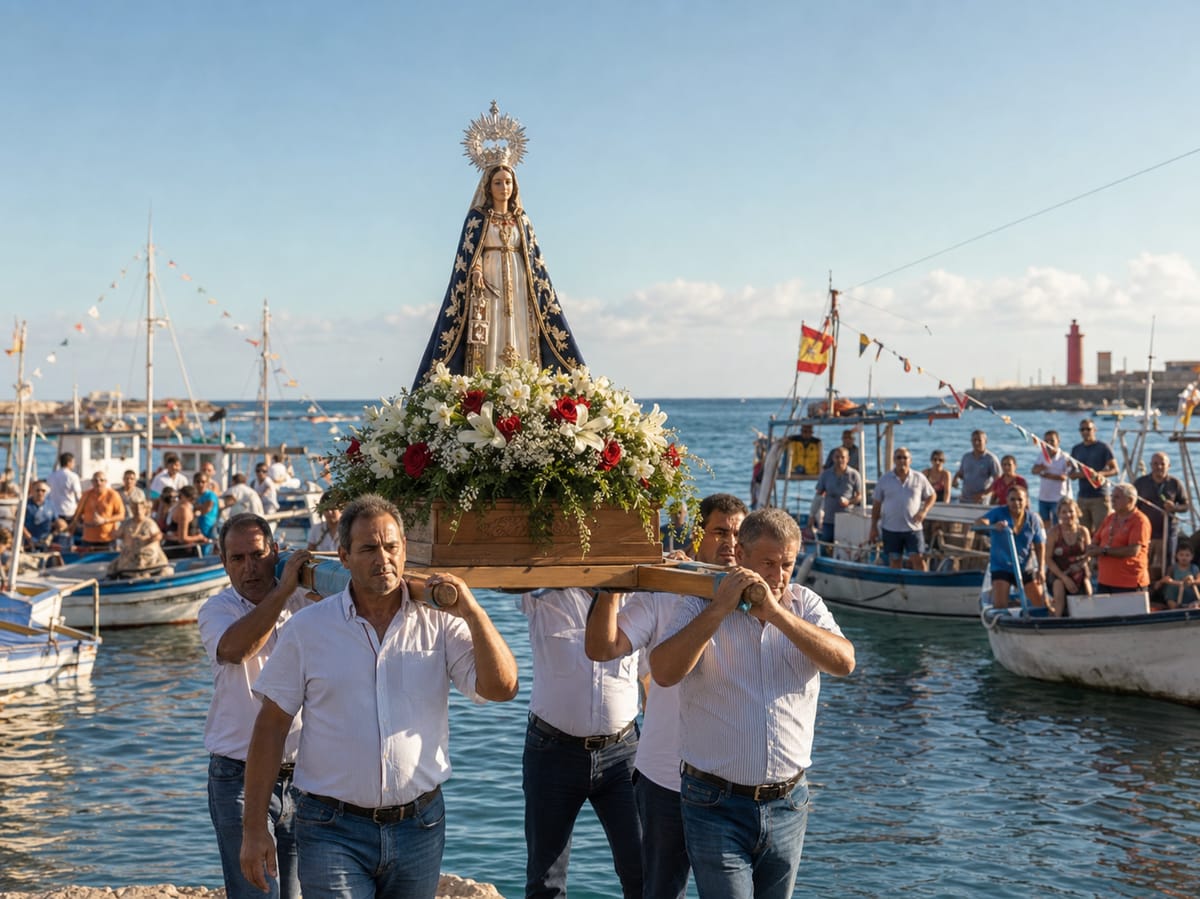
At the height of summer comes the most seafaring festival of all. On 16 July, the neighbourhood of Pescadería honours the Virgen del Carmen, patron saint of seafaring people: the image is carried through the streets of the quarter and down to the fishing harbour, where the procession meets the boats and leans out over the water that gives the devotion its meaning.
It is a festival of identity more than of spectacle. Pescadería and La Chanca are lived-in neighbourhoods, with a fishing and flamenco memory of their own, and the procession belongs to their residents before it belongs to their photographers. It deserves to be watched in that spirit: from the shore, with respect for the grief and the joy the date condenses for the families of the sea.
August: the Feria de Almería
In the second half of August, the city holds its great annual fair in honour of the Virgen del Mar. It is the biggest date of the year and the one that best sums up Almería's double rhythm: daytime in the centre, night-time at the fairground. Although the programme changes with each edition, the pattern repeats:
- Midday feria: the streets and squares of the centre fill with terraces, tapas and music until mid-afternoon.
- Night-time casetas — festival marquees — at the fairground, with dinner, dancing and rides until the early hours.
- Horses and equestrian events, a legacy of the livestock origins of many Andalusian fairs.
- Concerts and shows for all audiences, from copla to pop.
- Pottery fair, a traditional ceramics market that connects the festivities with the province's crafts.
Exact dates, concert line-ups and stages are published each year: check them on the official pages before booking. And if music interests you beyond the fair — flamenco peñas, taranto, guitar — carry on with the cinema and music guide.
26 December: the Día del Pendón
The year closes with a ceremony unlike any other: no marquees, no bonfires, plenty of protocol. Every 26 December, the Día del Pendón — Banner Day — commemorates the entry of the Catholic Monarchs into the city in 1489: the banner is brought down from the town hall, on the Plaza Vieja, and carried in civic procession to the cathedral, where the commemorative service is held.
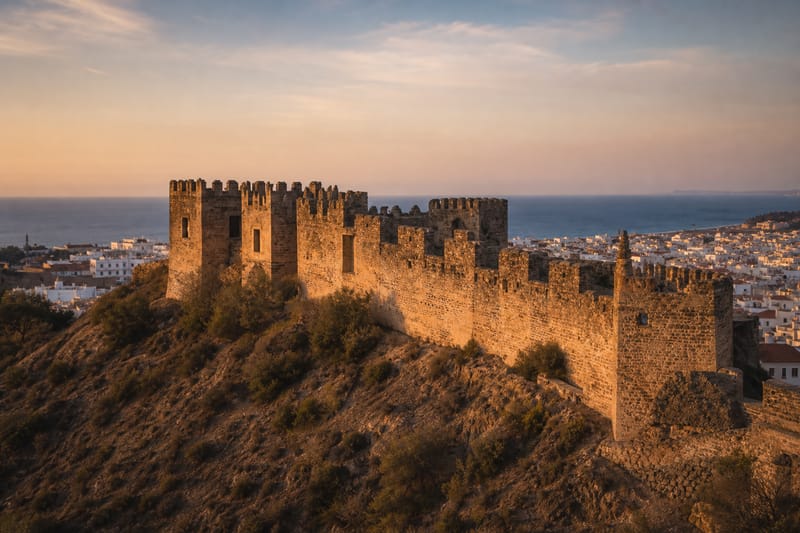
It is a historic date better understood today as shared memory than as a victors' tale: the Almería that changed hands that day is the same city that had been born as al-Mariyya in 955, raised the Alcazaba and woven silk for half the Mediterranean. Anyone who wants the full layers of that history — from the medina to the fortress cathedral — will find them in the history and heritage guide.
Before you plan the trip: dates, routes, timetables and rules (such as those for the San Juan bonfires or the traffic closures around processions) change every year. Always check the official programme on the festivals and traditions page of Turismo de Almería and, to fit a festival into your getaway, lean on our 24, 48 and 72-hour itineraries.
Sources
This guide draws together institutional sources; the calendar, the rituals and the historical facts cited come from them. Annual programmes should always be verified on the official pages.
- Turismo de Almería — Festivals and traditions
- Turismo de Almería — History of the city
- Turismo de Almería — The Christian conquest (1489)
- Turismo de Almería — Cultural tourism (sanctuary of the Virgen del Mar)
- Spain.info — Almería destination guide
- Andalucía.org — Practical guide to the city of Almería (PDF)